
ANNOUNCEMENTS:
10-19 – 10-23 (Priest Institute No weekday Mass)
Therese our Parish Administrative Assistant is retiring in November. We are looking for a new Administrative Assistant for the Parish. All who are interested please drop by the office and fill out an application. Requirements are a practicing Catholic, computer knowledge, secretarial experience, and bi-lingual skills appreciated but not necessary.
JUBILACIÓN: Therese, nuestra asistente administrativa parroquial, se jubilará en noviembre. Buscamos una nueva persona para ocupar este puesto. Las personas interesadas pueden pasar por la oficina para completar una solicitud. Los requisitos son: ser católico practicante, tener conocimientos de informática y experiencia en labores de secretaría; se valorará el bilingüismo, aunque no es indispensable.
OUR MISSON
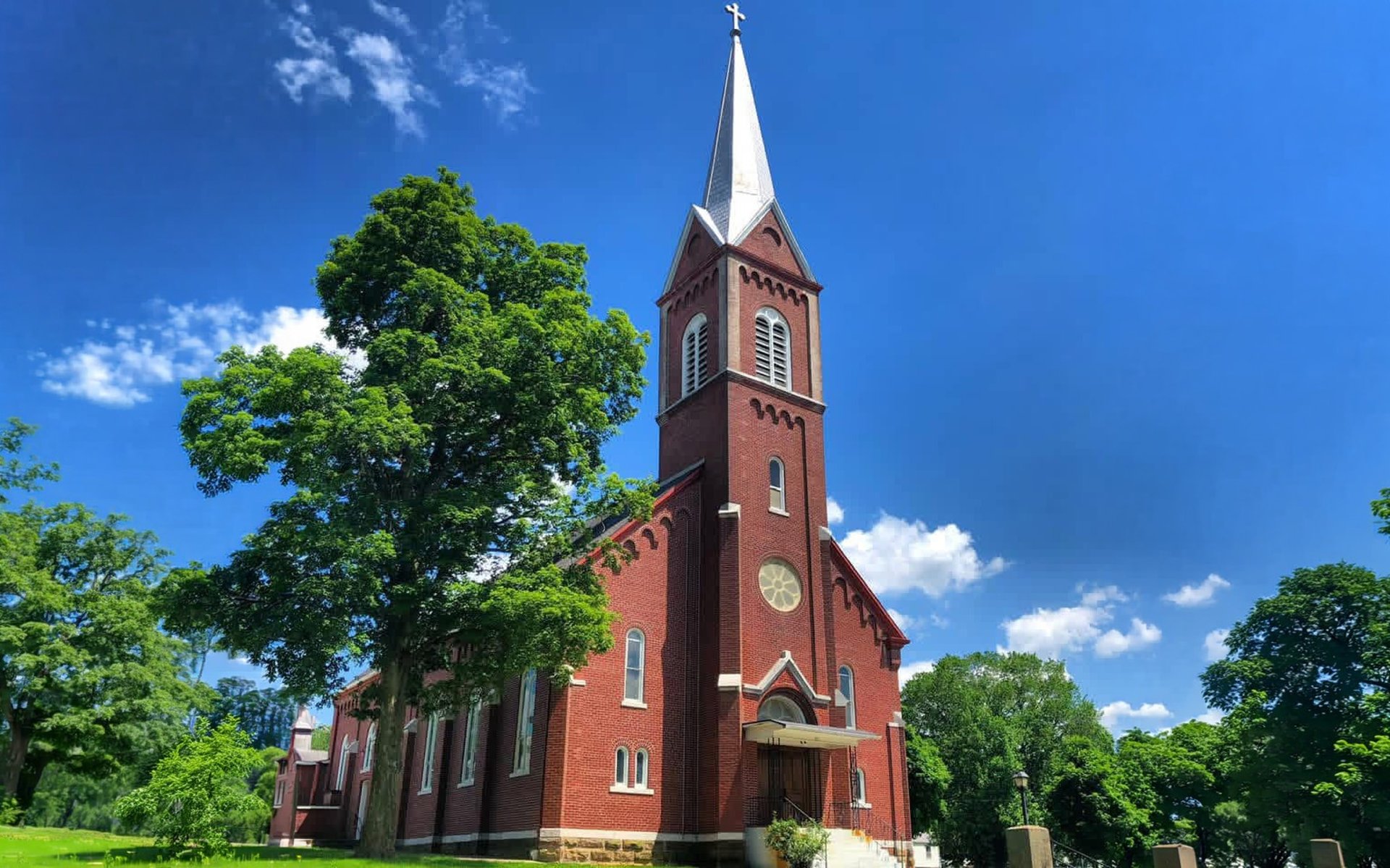
Sacred Heart Parish is the assembly in which God's word is proclaimed, the Eucharist is celebrated and God's people are united in a local community.
FATHER'S DAILY THOUGHTS


Contemplating today's Gospel:?Tuesday 6 October 2026: Tuesday of the Twenty-seventh Week in Ordinary Time: 1st Reading (Gal 1:13-24): Responsorial Psalm: 138: R/. Guide me, Lord, along the everlasting way. Gospel text (Lk 10:38-42): “Martha, Martha, you are anxious and worried about many things. There is need of only one thing”. Jesus visits the home of two sisters, Martha and Mary. Martha works hard in the kitchen preparing food and serving guests, while Mary sits quietly on the floor at Jesus's feet to listen to him speak. Martha feels overwhelmed and frustrated that she is doing all the work alone. She asks Jesus to tell Mary to help her. Jesus gently corrects Martha, explaining that she is stressed over many temporary tasks, while Mary has chosen the "better part"—focusing on God's presence, which will not be taken away. There are different ways of welcoming Jesus in our lives. We need to discern what is the best way that he might be expecting from us at the moment. And our discernment must be born of friendship and love. Love and friendship are at the heart of today’s Gospel. “Jesus loved Martha and her sister and Lazarus” (Jn 11:5). Undoubtedly, this family in Bethany may be considered among Jesus’ best friends, and this explains the very frank interaction among the characters in today’s Gospel. Mary, the younger sister, takes her place at the feet of Jesus to listen to him as a disciple. Due to this seemingly impudent and transgressive action, Martha reprimands Jesus, “Lord, do you not care…” (v 40). To this complaint Jesus turns lovingly toward Martha, even repeating her name twice, so she can gather herself together and discern what is more important. Let us ask the Lord for the gift of discernment so we will know what is the “good” that we should choose at every instance of our lives. There are antidotes to anxiety that we feel. First, we can actually DO something. Hopelessness can creep in when we feel anxiety and worry, which can lead to us standing still or giving up. But if we jump into the fray, roll up our sleeves and face anxiety head on, our stress will lessen. We do this by being disciples of the Gospel. We share the good news, as we’ve seen Jesus imploring his disciples to do in the Gospel readings in recent weeks. We do this by understanding our faith and professing it unabashedly and without shame. We do this by standing up for what we believe in, even if it means we will be mocked, shamed, laughed at or humiliated. If we are Catholics, we must do this! Secondly, and most importantly – we sit at the feet of Jesus and listen, as Mary did. In the stillness of silence and in earnest prayer, our loving Lord hears our prayers and supplies us with the all that need. Jesus is “the better part.” In truth, he is the BEST part. But if we are immersed in busyness, if we are distracted by frivolous activity, we increase our chances of feeling anxiety, because we are not placing ourselves in the light and love of Christ. During the Lord’s Prayer, as we pray to God the Father, the celebrant says “In your mercy keep us free from sin and protect us from all anxiety, as we await the joyful hope for the coming of our Savior, Jesus Christ.” If we focus on doing all we can to me more like Mary and less like Martha, we will surely be protected from anxiety and become the true disciples of Jesus.
Contemplating today's Gospel: Monday 5 October 2026: Memorial of Saint Faustina Kowalska, Virgin: Monday of the Twenty-seventh Week in Ordinary Time: 1st Reading (Gal 1:6-12): Responsorial Psalm: 110: R/. The Lord will remember his covenant for ever. Gospel text (Lk 10:25-37): “What must I do to inherit eternal life?” To inherit eternal life, Jesus answered a religious expert in Luke 10:25–28 by telling him to love God completely and to love your neighbor as yourself. This passage calls us to Love the Lord our God with all your heart, soul, strength, and mind. It also urges us to Love our Neighbor by treating others with mercy and compassion, just like the Good Samaritan in the biblical parable. We are encouraged to Keep the Commandments By Followinh God's moral laws, such as honoring our parents and not stealing or lying. Jesus’ response clears up the idea of earning. He states all the areas the young man has brilliantly succeeded. He had checked ALL the boxes, almost. It wasn’t about box checking though. Jesus then went straight to the heart of the matter. What was in his heart that was not allowing complete surrender? Jesus graciously shared that it is not about works but giving up one thing and following Him. Choosing to abstain from something unimportant to us is quite easy. I remember as a kid wanting to give up lima beans for lent and thinking I was obedient. Yes, immaturity was a part of that but so was my “me first” flesh. The heart posture is not necessarily about abstaining or the “one thing”. What or who do you put before following Jesus? It could be more than “one thing” so we must not focus on the number He asked the young man to give up. The man was “disheartened” because Jesus had nailed it. There was no earning that could be done to inherit eternal life. A fully surrendered heart to follow Him is what was being asked. It isn’t our works that are the provision for the inheritance, it is “who” we are inside as well. God knows our hearts and for each of us, it will be a different heart request. It’s interesting to think of the word inheritance. It is always connected tot the loss of a loved one. Someone had to die for us to receive the inheritance. We simply receive it. Whatever you receive as an earthly inheritance, at best it could last your lifetime. It doesn’t compare to the inheritance offered through the gift of eternal life. Jesus had to die for us to receive this. We must surrender and place Him first in our lives. The treasure is ours to receive.
Contemplating today's Gospel: Sunday 4 October 2026: Twenty-seventh Sunday in Ordinary Time (A): 1st Reading (Isa 5:1-7): Responsorial Psalm: 79: R/. The vineyard of the Lord is the house of Israel. 2nd Reading (Phil 4:6-9): Gospel text (Mt 21:33-43): Jesus' story about an absentee landlord and his not-so-good tenants would have made sense to his audience. The hills of Galilee were lined with numerous vineyards, and it was quite common for the owners to let out their estates to tenants. Many did it for the sole purpose of collecting rent. Why did Jesus' story about wicked tenants cause offense to the scribes and Pharisees? It contained both a prophetic message and a warning. Isaiah had spoken of the house of Israel as "the vineyard of the Lord" (Isaiah 5:7). Jesus' listeners would have likely understood this parable as referring to God's dealing with a stubborn and rebellious people. This parable speaks to us today as well. It richly conveys some important truths about God and the way he deals with his people. First, it tells us of God's generosity and trust. The vineyard is well equipped with everything the tenants need. The owner went away and left the vineyard in the hands of the tenants. God, likewise trusts us enough to give us freedom to run life as we choose. This parable also tells us of God's patience and justice. Not once, but many times he forgives the tenants their debts. But while the tenants take advantage of the owner's patience, his judgment and justice prevail in the end. Jesus foretold both his death on the cross and his ultimate triumph. He knew he would be rejected and put to death, but he also knew that would not be the end. After rejection would come glory - the glory of his resurrection from the grave and his ascension to the right hand of the Father in heaven. The Lord blesses his people today with the gift of his kingdom - a kingdom of righteousness, peace, and joy in the Holy Spirit. And he promises that we will bear much fruit if we abide in him (see John 15:1-11). He entrusts his gifts and grace (unmerited favor and blessing) to each of us and he gives us work to do in his vineyard - the body of Christ in our midst today. He promises that our labor for him will not be in vain if we persevere with faith to the end (see 1 Corinthians 15:58). We can expect trials and even persecution. But in the end we will see triumph. We are called to follow and serve the Lord Jesus with joyful hope and confidence in the victory he has won for us and the gift of abundant new life in the Holy Spirit.
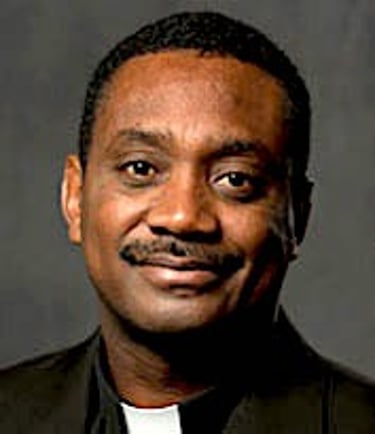
Father Rahab Isidor
Father Isidor Rahab was born in Haiti to a Dominican mother and a Haitian father. As a boy, Father Rahab enjoyed playing soccer nearly every day and swimming in the town's rivers with cousins and friends. His mother recalls Father playing "priest" with the kids in the neighborhood; she owned a grocery store where young Isidor was able to get fresh bread and practice giving communion by tearing off pieces from the bread. However, entering the priesthood was not even a consideration until much later in his educational journey.
Wanting to follow in his father's footsteps, Father Rahab applied to the military academy and was accepted. However, his mother was opposed to the idea, and Father Rahab declined the acceptance. At the urging of his maternal grandfather, he entered law school, financed by his local priest. Father studied law in both Haiti and in France, from about 1990-1994. Subsequently, Father was also encouraged to learn English, so the local priest sent him to Loyola University in New Orleans.
At Loyola, Father's interest in the priesthood began to ignite; while studying English, he also took a couple of theology classes. It was here that he met a Dominican priest who wanted him to join their order. After about a year of consideration, and now in his mid-twenties, Father decided to join the Southern Dominican Province, the Order of Preachers. After he completed his ESL certification (English as a Second Language), the Dominicans took over funding Father's education. They sent him to San Antonio, Texas, for his novitiate year, during which he made his first vow as a Dominican student. This was the beginning of his journey into the priesthood.
After several years of study that took Father from Barry University in Miami to St. Louis University and its then-Aquinas Institute of Theology, he ultimately earned two master's degrees: a Master of Divinity (MDiv) and a Master of Arts in Theology. Before completion of his second master's degree, he left the Dominican Order to join the Diocese of Springfield-Cape Girardeau, ultimately resulting in his ordination at Holy Trinity CC in Aurora in July of 2006.
Father Rahab's career trajectory since ordination under Bishop John Liebrecht:
2006-2008: St. Vincent de Paul CC, Associate Pastor and Notre Dame Regional High School, Chaplain (Cape Girardeau)
2008: St. Elizabeth Ann Seton CC, Associate Pastor (Springfield)
2009: St. Joseph CC, Parochial Administrator (Billings)
2010-2018: Sacred Heart CC, Pastor (Webb City)
2014 - Current: Webb City Police Department Chaplain
Under Bishop Edward M. Rice:
2018-2019: Pastor of Saint Lawrence CC (Monett), Sacred Heart CC (Verona), St. Edward CC (Cassville), and Holy Family CC (Shell Knob)
2018- Current: continues as Pastor of St. Lawrence CC (Monett) and Sacred Heart CC (Verona)
In his free time, Father Rahab enjoys watching action movies, walking around the neighborhood, and checking in on his friends via Facebook. Chinese food is a culinary favorite. He also likes to follow the USA and Haitian men's soccer teams.
Weekly Mass Schedule
UPCOMING EVENTS
Wednesday
8:00a.m.
Friday
8:00a.m.
Spanish Mass
Saturday
6:30 p.m.
English Mass
Sunday
8:00 a.m.

Please join us for the monthly meeting on October 7, 2026 in the parish hall.


KNIGHT OS COLUMBUS 50/50 RAFFLE The Knights of Columbus are raising money to help buy a mobile ultrasound machine for the Tri-County Pregnancy Care Center. 50/50 tickets are available at the table in the back of church; 1 for $5 or 5 for $20. The drawing will be on October 18th. Donations can be made in lieu of buying tickets.
RIFA 50/50 DE LOS CABALLEROS DE COLÓN: Los Caballeros de Colón están recaudando fondos para ayudar a comprar un ecógrafo móvil para el Tri-County Pregnancy Care Center. Los boletos para la rifa 50/50 están disponibles en la mesa situada al fondo de la iglesia: 1 boleto por $5 o 5 boletos por $20. El sorteo se realizará el 18 de octubre. También se pueden hacer donaciones en lugar de comprar boletos.

The Knights of Columbus will have Tootsie Rolls for your donation to the Barry/Lawrence County Development Center. Please be generous and get a sweet treat too.
HARVEST MASS—SUN., OCT. 11 Please join Bishop Rice on the farm in Southwest Missouri to celebrate Holy Mass and a picnic in honor and recognition of our farmers, Sun., Oct. 11, 1pm. The outdoor Mass will be held at Kleiboeker Crop Services, 3797 Lawrence 2220 in Pierce City. The meal is being provided by St. Mary PCCW, Knights of Columbus, and Outreach group, with assistance from the area PCCW. The meal is pulled pork sandwiches, chips, cookies & bottled water…the only request is to bring a chair! Bishop Rice will bless farm equipment and there will be space to park equipment. All are welcome to attend! For more information, contact St. Mary Parish office, (417) 476-2827.
MISA DE LA COSECHA — Domingo, 11 de octubre. Acompañe al obispo Rice en una granja del suroeste de Misuri para celebrar la Santa Misa y disfrutar de un picnic en honor y reconocimiento a nuestros agricultores, el domingo 11 de octubre a la 1:00 p. m. La misa al aire libre se llevará a cabo en Kleiboeker Crop Services, ubicado en 3797 Lawrence 2220, Pierce City. La comida será ofrecida por la PCCW de St. Mary, los Caballeros de Colón y el grupo Outreach, con la colaboración de la PCCW de la zona. El menú consistirá en sándwiches de cerdo desmenuzado (*pulled pork*), papas fritas, galletas y agua embotellada; ¡lo único que se pide es traer una silla! El obispo Rice bendecirá la maquinaria agrícola y habrá espacio para estacionar dicho equipo. ¡Todos son bienvenidos! Para más información, comuníquese con la oficina de la parroquia St. Mary al (417) 476-2827.
QUICK LINKS
SACRAMENTS
GROUPS